
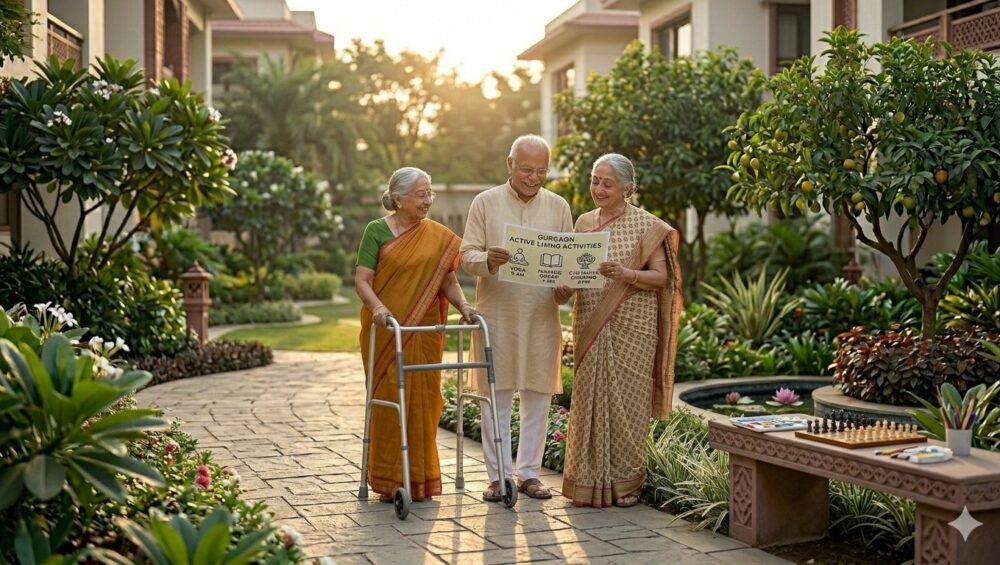
When people hear the phrase active senior living communities, they often imagine a retirement setting with better amenities. That description is not wrong, but it is too shallow to be useful. The real difference lies elsewhere. These communities are designed around a particular idea of ageing: that later life should not be organised only around support, but around vitality, routine, social ease, and the intelligent removal of everyday friction.
That is the angle from which this subject makes sense. An active senior living community is not simply a place to stay after retirement. It is a place built for people who still want shape in their day, company when they want it, privacy when they do not, and a standard of living that feels composed rather than improvised. In that sense, the appeal is not only practical. It is cultural. It reflects a more modern expectation of later life.
For many families, that is precisely why the category matters. The question is no longer only how a parent will be cared for. It is how a mother or father in later life will continue to live well.
What active senior living communities actually are
An active senior living community is meant for older adults who are largely independent but want a more manageable and engaging way of life. It usually combines private residences with shared facilities, organised services, and a community structure that makes daily living easier without making it feel supervised.
This is what separates the model from both a conventional home and a care-led senior facility. In a conventional home, the older person is still responsible for the operational burden of daily life, whether directly or through staff management. In a care-led environment, support may be more visible, but autonomy can feel reduced. Active senior living communities sit somewhere in between. They are built for people who do not want to spend their later years negotiating with household maintenance, isolation, or domestic logistics, but also do not want life to feel institutional.
That balance is the category’s real strength.
Why the idea is becoming more relevant
A great many older adults do not need intensive care. What they need is a better setting.
The family home may still look substantial, but the work of sustaining it grows quietly heavier. There are staff to manage, repairs to track, meals to organise, appointments to coordinate, and an increasing dependence on systems that were never designed for age. At the same time, many parents are not eager to move into a child’s household and fold themselves into another generation’s routine. They want independence, but not isolation. They want support, but not in a way that makes life feel reduced.
This is where active senior living begins to make sense. It does not ask a person to choose between being entirely on their own and being looked after in a visibly care-oriented setting. It offers a third arrangement: independent living within a well-managed community.
That is a very different proposition from the old idea of retirement housing.
The role of senior living apartments
One of the reasons this model works so well is the way senior living apartments are designed. The apartment format gives residents privacy, familiarity, and the dignity of having a place that is unmistakably their own. At the same time, it removes much of the burden that a traditional standalone house can create.
A senior living apartment is not valuable simply because it is smaller or easier to maintain. Its value lies in proportion. The space is usually better suited to this stage of life. It is easier to move through, easier to manage, and easier to enjoy. There is enough room for personal habits, books, photographs, visiting family, and daily routine, but not so much operational excess that the house itself becomes a full-time concern.
This is one of the quieter luxuries of senior living apartments. They allow a person to inhabit space without having to spend energy constantly holding that space together.
Why engagement matters so much in later life
The word active can sometimes be misunderstood. It does not mean relentless busyness. It does not mean a calendar filled for the sake of appearances. It means that the day still has movement in it — social, mental, physical, or emotional.
This is more important than it sounds.
A person in later life may be medically stable and financially secure, yet still begin to shrink inside a life that has grown too narrow. Meals become solitary. Outings become infrequent. Conversation depends on family calls. The house remains comfortable, but the day loses texture. That kind of thinning is easy to miss because nothing dramatic announces it.
Active senior living communities answer this by putting engagement back into the structure of daily life. There may be walking paths, fitness sessions, reading groups, cultural evenings, spiritual gatherings, shared meals, hobby spaces, gardens, lounges, or simply the ordinary social possibility of other people nearby. The point is not to create compulsory sociability. It is to make a fuller life available without effort.
That distinction matters. A person should be able to participate without pressure and withdraw without slipping into loneliness.
The benefits of an engaging lifestyle
The first benefit is social ease. In a good active senior living community, company becomes ambient rather than scheduled. A resident does not have to wait for a festival, a family visit, or a doctor’s appointment to see other people. Human contact returns to the ordinary day. That alone can change the emotional climate of later life.
The second benefit is mental freshness. A day with shape tends to hold the mind differently from a day organised only around television, meals, and the passage of time. Even modest forms of activity — conversation, light exercise, reading, classes, games, music, prayer, community events — help preserve a sense of involvement with life rather than passive observation of it.
The third benefit is physical continuity. An engaging environment gently encourages movement. Walking to shared spaces, participating in light fitness routines, spending time outdoors, or simply maintaining a more active daily rhythm can help a person remain more confident in their own body.
The fourth benefit is emotional steadiness. A life with some outward rhythm tends to reduce the low-grade flatness that can settle over later years when too much time is spent alone, indoors, and without meaningful variation. Engagement does not solve everything, but it does prevent the day from becoming shapeless.
And beneath all of this sits another benefit that families often recognise only after the move: relief. Not dramatic relief, but the kind that comes when a parent no longer seems to be carrying the whole day by effort alone.
Why active senior living often feels better than “staying busy”
There is a difference between an engaging environment and a forced one.
Some senior communities make the mistake of treating activity as a performance metric. A crowded calendar is taken as proof of quality. But older adults do not need to be managed into busyness. They need access to a setting where life feels alive, but not over-programmed.
The better active senior living communities understand this instinctively. They do not confuse energy with noise. They create a place where one can have a morning walk, breakfast in company, an hour with a book, a wellness session, a conversation over tea, and a quiet evening without feeling either under-stimulated or over-managed.
That balance is hard to get right. When it is right, it feels natural. The day has options, but not pressure. The resident has independence, but not isolation. The community is present, but not intrusive.
That is what makes the lifestyle sustainable.
The practical advantages families care about
The appeal of active senior living is not only emotional or social. Families also value the operational advantages.
Daily life becomes easier to organise. Meals, maintenance, housekeeping, security, and many shared services are handled within a structure. The parent is not spending time managing domestic staff, chasing repairs, or improvising every practical detail of the week. Children, in turn, are less likely to become remote coordinators of the entire household.
This point matters more than many families admit at first. A parent may still appear independent from a distance, while the family quietly supports the arrangement through calls, reminders, scheduling, and worry. A good active senior living setting reduces that invisible management load.
For many families, that is one of the most persuasive benefits of all: the parent retains independence, but within a more dependable environment.
Who active senior living communities are best suited for
They are best suited for older adults who are still largely independent and who want life to feel easier, lighter, and more socially alive. They work especially well for people who no longer want the burden of running a large house, for those whose children live elsewhere, and for those who value privacy but do not want the emotional cost of living alone.
They also suit a particular mindset. A person who sees later life as a phase to be arranged well rather than merely endured will often respond strongly to this model. The appeal is not rescue. It is refinement. It is the recognition that a better setting can preserve energy, appetite, self-respect, and enjoyment.
That is why senior living apartments in active communities often attract people who are not in visible decline at all. They are simply choosing a better architecture for everyday life.
What to look for in a good active senior living community
A brochure will mention amenities. A visit will tell you whether the place has life in it.
The right community should feel settled, not staged. The common areas should be naturally used. Residents should appear at ease rather than managed. The atmosphere should feel adult, calm, and socially comfortable. It should be possible to imagine your parent not just staying there, but actually inhabiting the day there.
It is also worth looking at the balance between private and shared life. Are the apartments genuinely comfortable? Are the shared spaces attractive enough to draw people out without forcing them? Is there enough activity to keep life engaged, but not so much programming that the place feels over-designed?
The better communities understand that dignity lies in choice. A resident should be able to join in, step back, host family, keep a routine, and still feel fully at home.
Conclusion
Active senior living communities matter because they change the frame through which ageing is imagined. They do not begin with decline. They begin with the idea that later life can still have shape, vitality, privacy, and social ease, provided the environment is designed intelligently enough.
That is why the model has become so relevant. It answers a need that many older adults feel before they can easily describe it: the desire for a life that is simpler to manage, richer in texture, and less dependent on domestic effort. Senior living apartments play an important role in that picture by giving residents privacy and ownership of their space within a broader community that supports the rhythm of everyday life.
At its best, active senior living does not make life smaller. It makes it lighter, steadier, and more engaging.
FAQs
Q1. What are active senior living communities?
Ans. Active senior living communities are residential communities for older adults who are largely independent but want an easier, more engaging lifestyle with access to shared amenities, services, and social opportunities.
Q2. How are senior living apartments different from regular apartments?
Ans. Senior living apartments are designed for later life. They are usually easier to maintain, easier to move through, and part of a broader community structure that offers services, support, and shared spaces.
Q3. What are the main benefits of active senior living communities?
Ans. The main benefits include social connection, a more engaging daily routine, reduced household burden, better use of shared amenities, and a living environment that supports independence without isolation.
Q4. Are active senior living communities only for people who need care?
Ans. No. They are often best suited to people who are still independent but want a better-organised and more socially connected way of living.