Growing older changes our routines, our circles, and sometimes our sense of purpose. Yet one thing stays constant across ages and cultures: we thrive in the company of others. From neighborhood tea chats to shared morning walks, our best days often include people. That’s why modern senior living communities do more than offer safety and services—they nurture connection, comfort, and joy. In this article, we’ll explore how living among peers supports emotional well-being in seniors, why history and philosophy have long tied happiness to community, and how the everyday social life in retirement homes turns small moments into steady uplift.
Why people help us feel like ourselves
We are social beings. Aristotle famously observed that humans are “political” or community animals, meaning we’re built for companionship and cooperation. Centuries earlier in China, Confucius celebrated friendship as a path to harmony and self-cultivation—“Is it not a joy to have friends come from afar?” The message is timeless: good company steadies the heart.
For older adults, this truth takes on special meaning. Life transitions—retirement or children moving away—can shrink daily circles. When that happens, the emotional benefits of living among people who “get” you become more than nice-to-have; they become fuel for resilience. In a community of peers, you’re not explaining your life stage—you’re sharing it.
Emotional gains you can feel (and measure)
A well-designed community supports both the quiet and the lively sides of life. Here are core emotional benefits residents often report:
1) Belonging and acceptance
Seeing familiar faces at breakfast or in the garden builds a gentle rhythm of recognition. You feel known, not invisible. That steady recognition is a powerful antidote to loneliness.
2) Daily purpose
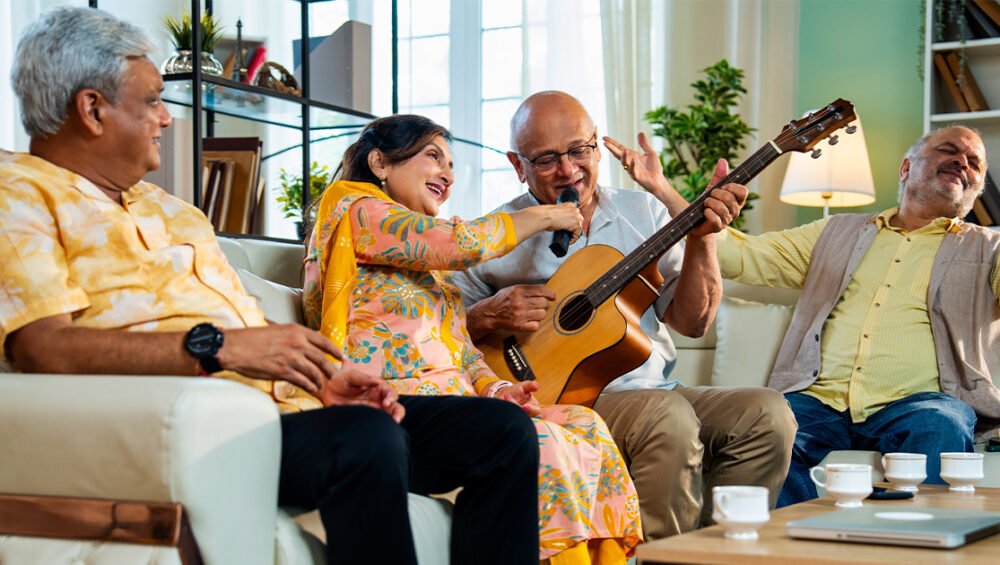
From morning yoga to evening music sessions, small commitments create structure. Purpose isn’t only grand; it’s often the next meeting, the next book club, the next festival. Purpose stabilizes moods.
3) Shared joy—multiplied
Laughter spreads more easily in groups. A joke at a table, a memory shared, a song sung off-key—joy echoes. The result is a “lift” that’s hard to find in isolation.
4) Emotional safety
Peer support matters. A neighbour who has managed arthritis, grief, or dietary changes offers practical empathy. Being understood lowers stress and helps you try new routines.
5) Gentle accountability
A walking buddy or a hobby group nudges consistency. When someone expects you for a stroll, you go. Activity supports sleep, appetite, and mood—key pillars of emotional well-being in seniors.
6) Cognitive stimulation
Conversation, games, music, and learning new skills exercise the mind. Even casual debates—What’s the best mango? Which raga fits monsoon?—keep curiosity alive.
7) Celebration and continuity
Festivals, birthdays, and cultural evenings stitch the year together. Rituals provide comfort and mark time with meaning, which is grounding for the heart.
Like-minded company: the quiet superpower
Living among people with shared interests doubles the benefits. When hobbies meet community, participation becomes natural. A gardener finds other gardeners; a reader discovers a book circle; a music lover meets companions for concerts and bhajans. Like-minded peers make it easy to belong—no performance required. This is where social life in retirement homes shines: there’s always someone to walk with, dine with, or simply sit in companionable silence.
Introverts are welcome, too. Good communities respect different energy levels. You can choose a balcony chat over a big event, a library nook over a noisy hall. Emotional health is about options, not pressure.
The heart of it all
Community eases life’s edges. It turns ordinary mornings into something to look forward to. When you know people will notice if you skipped a walk, cheer if you learned a new raga, or listen if you’re having a heavy day, the world feels friendlier. That’s the quiet power of social life in retirement homes—life shared becomes life lightened.
Emotional health isn’t only about coping; it’s about feeling connected, purposeful, and seen. Senior living communities, at their best, make those feelings a daily habit. For many older adults, that habit is the difference between getting by and truly living.